-Written by Chris Chiller
“Things” are in the saddle and ride mankind — Ralph Waldo Emerson
Six years ago, my family agreed that it was time to leave the state where we had lived together for sixteen years. We are a blended family, and all that we had gathered constituted a lot of stuff.
We launched ourselves into a major remodel of a house and found a way to buy materials needed at a deep, deep discount. With that discount came materials and fixtures we had no immediate need of, but they were new. They went into storage, along with other duplicate stuff we had. After keeping all that stuff and buying more stuff at auctions, we had a truly great pile of stuff.
The decision to move triggered a harsh assessment of what all that stuff was really worth to us. We started taking pickup loads to Habitat for Humanity’s ReStore, but stuff is sticky and we sometimes came home with a half load. Worse. We congratulated ourselves on how careful we had been.
By careful loading and painful elimination of stuff that just couldn’t fit, we managed to fit our household into three 24’ Budget trucks. There was some attrition in the move halfway across the continent and we lost some more stuff. We moved into a much smaller house with less stuff. Still a lot, but less.
I thought I might refinish furniture in my retirement, and set up to do woodwork in a double garage. I was still, foolishly, in acquisition mode, always wanting one more tool or one more estate sale load of hardwood or one more bulk buy of hardware that I might, maybe, use someday. I have a box somewhere with 13 assorted brass robe hooks!
A series of unhappy events forced us to contemplate moving again after just a few months, and we found a wonderful house on acreage with a giant shop and warehouse racking on one long wall. All my stuff fit in the shop, and after insulating and adding a floor, the excess household stuff fit in the house’s attic.
The truth is that a lot of the stuff we lugged halfway across the continent came because I couldn’t separate good sense from strong emotion. I got both some sort of self-flagellation and self-righteous satisfaction when I donated or disposed of something I felt still had value. I had formed an attachment to the things, many times for no rational reason. Some things I would look at and think I needed them, but deeper thought could have shown me that I was remembering a house I lived in ten years before.
A lot of stuff I kept because where would I ever get another? Like that kerosene lamp buggy headlight. Where would I get another? Or that unopened lecture bottle full of Xenon?
Finally, there were all the woodworking tools. Useful but requiring maintenance and careful curation. I was on the verge of becoming Thoreau’s “tool of the tool.” Even worse, many of the tools I bought required additional bits to work at all. My tools had tools!
And then something changed. Credit to my mother-in-law, who lives with us, for getting there first. Not long after we moved in, she began to dispose of personal papers and items she had clung to for decades. Next she began to donate clothes and kitchen implements and shoes and the assorted stuff a housekeeping woman somehow adds to her inventory without really remembering why. Her personal pile of stuff was shrinking fast.
Her daughter, my wife, saw the utility of the exercise and began moving out excess stuff. Somehow along the way we had gotten musical instruments none of us could play. Out went the trombone, the trumpet, the accordion, and two ¾ size violins. Gone were bolts of fabric carried along for 20 years. Books in our library were sorted and donated or disposed of. All the little items kept as mementos of our daughter’s childhood were scrutinized and any not bearing a tearjerking memory were sent off. These women were showing me a healthy attitude toward their stuff.
I am the last to join, perhaps because it seems almost built in for men to work to accumulate goods. James Brown was calling out an archetype when he sang, “And after man make everything, everything he can, you know that man makes money to buy from other man.” Somehow having a lot of stuff was a subconscious insulation from the flames of want. But it is a non-discriminating subconscious in some of us men, that only accepts more to sate its hunger.
The simple truth is that my stuff has come to own me. Its demands are non-negotiable. My stuff can get me out of bed when it stops working in the middle of the night. I have been a slave to my stuff.
This year I have spent time looking at my shop full of stuff, at my eight guitars, at my drawers full of outdated electronics and cords and whatever else. We have two laser printers and almost never print anything anymore. I have more things around me that need some sort of fix-me attention than I have perfectly working items. Three compressors is two too many. 24 cameras my Dad and I collected sit in boxes on a shelf.
Sometimes, when I put my hand on one of his cameras, I see him taking pictures, working to get the perfect exposure at the scenic place we visited and I fog up a little. When he was photographing, he was truly happy. The thing is, nobody else knows that but me, and I’m 71. As another decade streaks by, no one will remember Bill, though so many loved and admired him during his lifetime.
And when I touch my guitars I remember some event where I was playing and all my friends were playing and I felt the flow, the joy of that moment. So I hang on to the guitar as if I could turn it upside down and shake out that joy along with the pick I dropped in the soundhole five years ago.
That’s the thing about our stuff. If you, like me, are hanging on to something because it brings a memory to you, the memory won’t disappear if the thing is lost. You won’t disappear if you are not the mighty hunter coming home with some new stuff either. It took me far too long to realize that.
One other thing I learned the hard way about stuff: A couple of years after my parents died, an extreme forest fire swept over the property I had shared with them, and evaporated their manufactured home and all of their stuff that I hadn’t been able to deal with. I didn’t learn then what I know now. The stuff they lived in was not who they were, and the disappearance of their stuff did not make me forget them. I don’t need to hold my Dads camera to see him when he was capturing images.
Now I have started to think about my stuff in terms of what a burden my memories will be. Someone will have to sort through all the stuff I cling to. Someone who may associate something with me and a time when I was happy, and think about hanging on. I hope I have divested enough stuff that they can put what they keep in a carry-on bag. I have no wish to afflict any of my family with the chains of slavery all my stuff has put on me. They are the people whom I most want to be free to pursue their happiness,
I am resolved to make this the year I shrink my pile of stuff. By how little I leave to sort through, I hope my children understand how much I loved them. I want to leave them what my parents left me: golden memories of fun and enduring love.
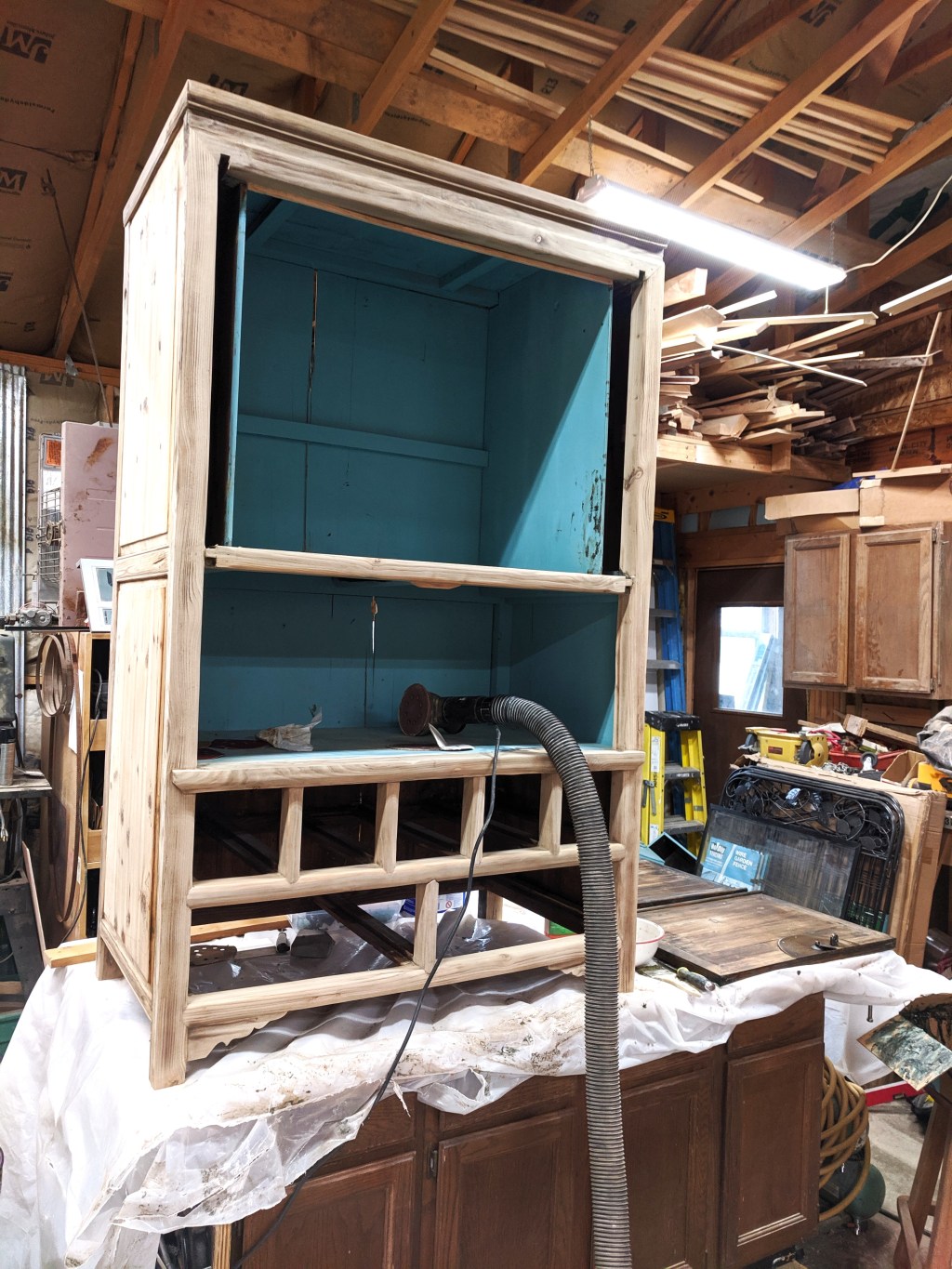
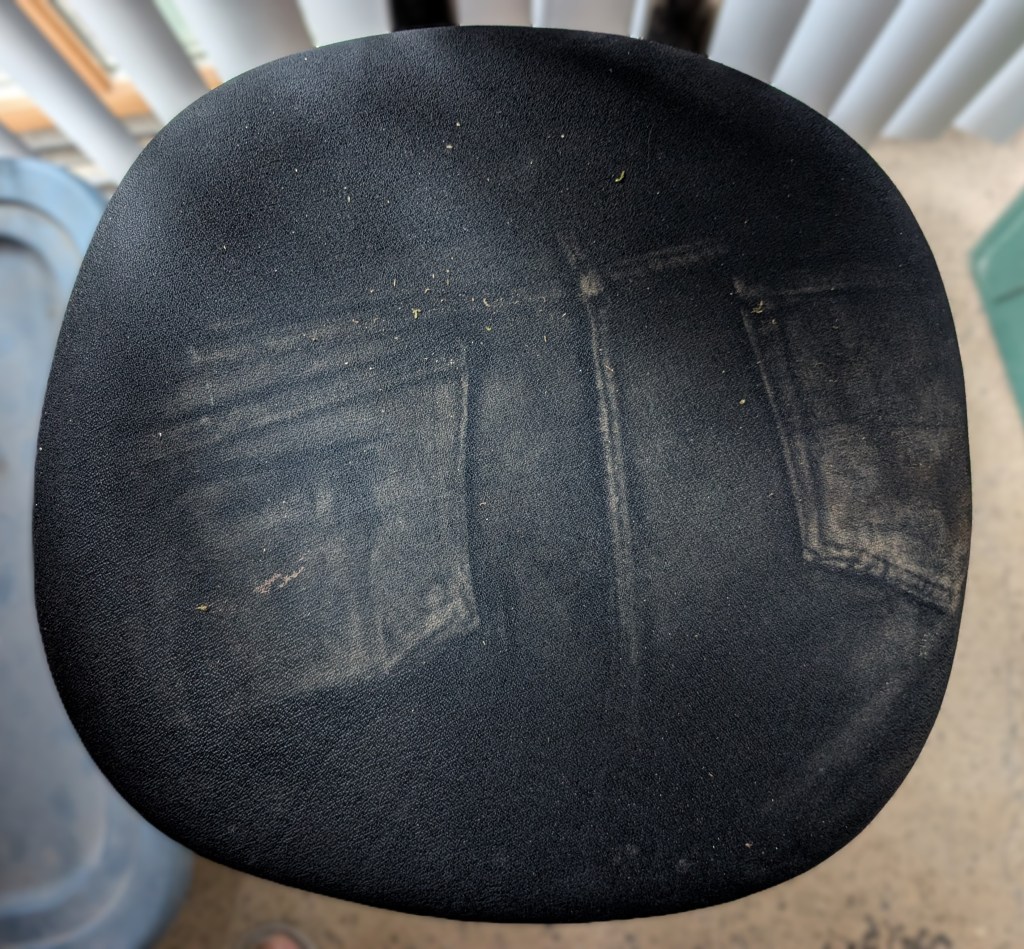
The photo is of one of our favorite restoration projects we use to this day. Good stuff.
Please like, share, subscribe, and feel free to comment on, well, stuff.




Leave a Reply