So Many Things to Fear—So Little Time by Chris Chiller
AJ Alanson’s newest Admiral Inn Mysteries book, A Ghost in the Tide, contains a central plotline confronting one of humanity’s worst fears. Innkeeper June Faust finds the body of a young woman in her carriage house. The woman was obviously injured, but how and why was she in the carriage house? The story follows June as she tries to work out what happened. It is exciting sleuthing, and Ms. Faust is a diligent investigator because every innkeeper knows their particular business cannot afford to be a place where somebody died, no matter the cause. Deaths in-house must be disclosed on real estate forms in some states, and there are many people who will not stay in an inn where there was a death by misadventure. Such fear is but a small glimpse of a more universal, and perfectly reasonable, fear of death.
While not everyone acts on their fear of death because of such a tenuous connection, most of us have developed ways to derail the anxiety we feel when confronted with a real death. We participate in one of our funerary traditions or modify the funeral to make a ritual of our own. Under it all we seek to negotiate with death by showing how seriously we take it. Or we show how unafraid we are by a non-serious funeral ritual. For example, writer Hunter S. Thompson had a group of his friends, including Johnny Depp, shoot his ashes out of a cannon. The ritual is for the living to manage their fear.
Since there aren’t funerals every week, we look for non-ritual ways to dissipate our fundamental terror. We begin to picture what might happen to us, to the people we love, or to our broader community. We try to take steps to avoid obvious dangers. We put our kids into swimming lessons. We install new batteries in our smoke alarms. (Stop reading this right now and go install those smoke alarms you bought and threw in the closet!). As we age we finally begin to watch our diet and remind ourselves we really ought to get up out of this chair and go for a long walk.
When the threat is beyond what we can handle alone, we outsource bigger fears to institutions. We have social safety nets to keep us fed, housed and warm if some personal disaster should come and community responders to community disasters when they come. We have had people watching our food supply to make sure we don’t eat something tainted and die. We read news articles that tell us which cancer is no longer an automatic death sentence. In short, we can push away almost all our fear of premature death.
But,(and there’s always a but), our internal systems that we use to respond to fear of danger in front of us are like a standing army in a nation that has not known war for generations. The command structure must practice tabletop war games and regular exercises to keep their soldiers sharp. Wargames are only useful if they are based on some plausible scenario. I’m not aware of any standing army pretending to be Lilliputians who have just had a giant wash up on their beach. If there be such, tell me right away, that would be wonderful.
The point of the army analogy is that we are always looking for things we can practice our fears on, and if the fear weighs too heavy on us we might turn our attention and energy to something that seems droll from a distance. We screen out everything that is scary, but fixate on small manageable things. Or at least things that seem manageable somehow. This is how an army trains when there is no real war.
The challenge can be that the army trains over and over on what worked in the last war instead of facing the scope of the real threat of the next war. Some of us substituted a fear of death by covid for a fear of masks and vaccines. Some of us substitute a fear of climate change disaster for a fear of financial ruin if things change too fast. Or even fear that before I get rich and buy a gas-fueled supercar they will all be gone.
Fear of anything not directly manifested to us but which is somewhat rational is called anxiety. I could lose my job, then my car, then my house, then my family and then I couldn’t afford extended cable and then no football. I wish that thought process was exaggerated, but I do believe thoughts equally unserious preoccupy a plurality of my fellow Americans. But loss of football is an easier consequence than backing up a few steps and contemplating a loss of family. Anxiety is only useful if we use it to avoid the outcome we really should fear.
If we are financially more or less sound, our anxiety becomes abstract, starting with what might be a bad change to our social standing, or the social standing of our community. AARP and veterans groups exist to make us feel like we have participated in a ritual to reduce some risk or another, as do the disease-centric charities. They are not malicious, but we ought to be clear-eyed about why we feel we need to send them donations.
On the other hand, there are individuals and groups that use our anxieties to get us to do things we wouldn’t if we were not a bit fearful. I need not mention the way people are moved by things in the political world, only nod toward what we all know to be real. Instead, think of social media influencers and product commercials and billboards. Each wants you to remember them and often the nudge is to identify something that raises your anxiety.
Some of you will recognize the advertisement that raised my latest somewhat silly anxiety. My daughter Ava buys her own clothes and supplies for college, but I still get a weirdly uncomfortable feeling when a back to school ad comes on, like I’m forgetting to do something important, say taking the scissors out of my back pocket before I sit down on that inflatable furniture.
So many fears, so little time to do them all justice. Or maybe not. Maybe some should be taken into custody by our rational minds. Some ought to be summarily dismissed as we encounter them. I’m almost 71. Fear that I don’t look young and vital is, what? Unwise? Ill-advised? Daft?
While fear is inevitable and unbidden, our existence, I feel, ought not to be only in service to our fears and anxieties. There is joy and love and even peace to be had in small moments. I want to make even less time for fear.
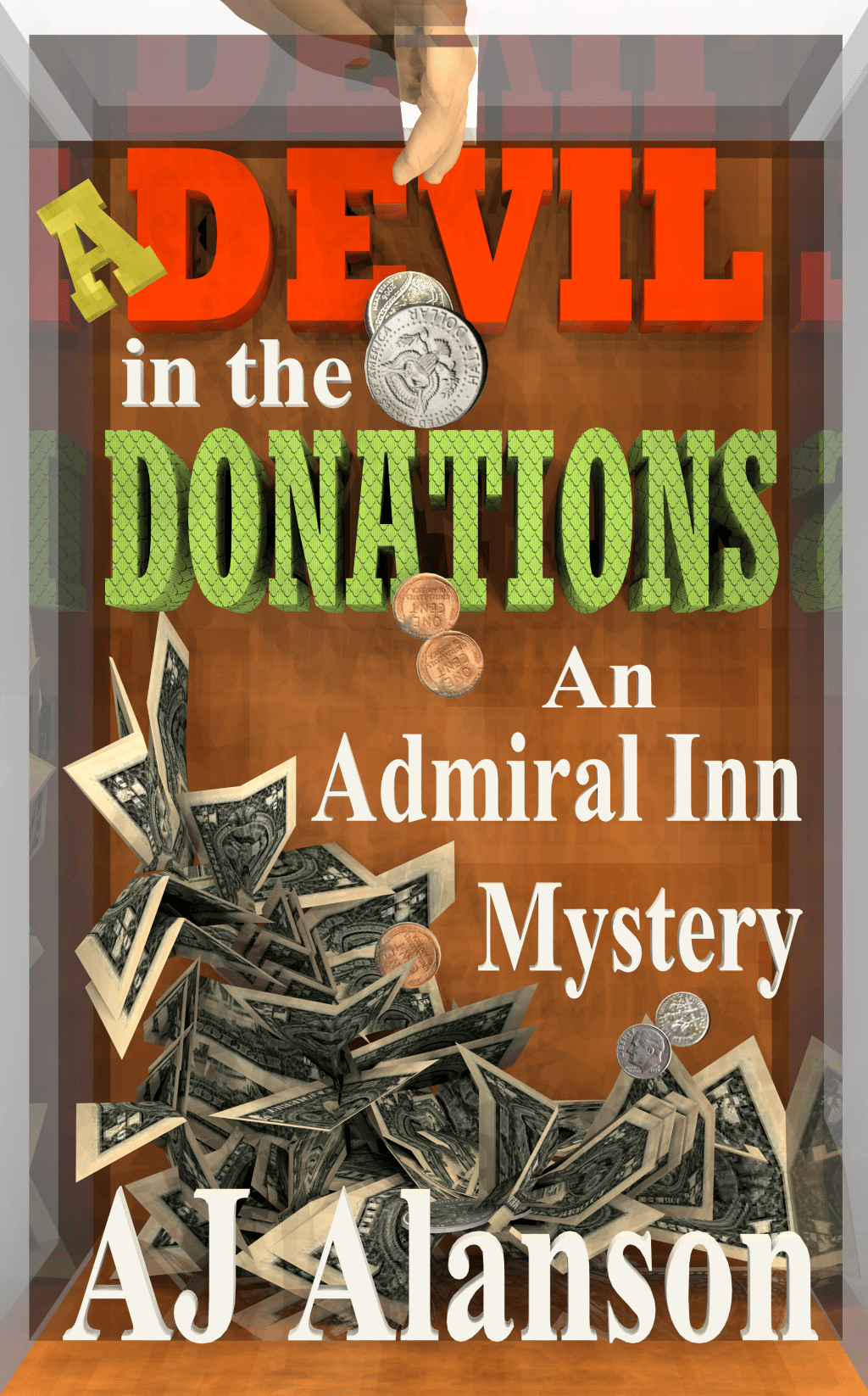
Today through Monday enter the Admiral Inn series through the first book, Devil in the Donations. The ebook is on a 0.99 promotion until 08/10/2026.



Leave a comment