Part 1 of Pirates, Smugglers, and Rum-Runners
Written by Chris Chiller
It must be admitted at the outset that Maine, with its snowy winters and no history of Spanish gold and silver transport, was not nearly so attractive to pirates as the Caribbean. There was no Jamaica’s Port Royal, “The Wickedest City on Earth,” in which to operate with impunity, no endless supply of rum, and no Spanish gold as most ships a pirate might intercept carried instead…dried cod.
Without offering too much of a spoiler, a historic smuggling operation is central to a subplot that twines through several books in the Admiral Inn Mysteries series. This is only as interesting as it is plausible. If there were no history of extra-legal trade in Maine, the plot is as fanciful as a cattle rustling in Connecticut; possible but highly unlikely. Fortunately, Maine has a well-documented history of moving goods without government sanction—smuggling. In fact, there is a running 300-year history of “owlers” and “freebooters” in Maine.
“Owler,” the amusing term used in “The Wolf in the Cove,” references the night time activities of smugglers who moved wool under the cover of darkness from England to France. Like the purloined goods, the moniker made its way to the New World, and became a common nickname for any sort of smuggler.
The term freebooter has more complex antecedents. As an anglicization of a Dutch expression, Vrijbuiter, freebooter simply meant free plunder or loot. This seems a straight line to today’s usage as vrijbuiter was adopted by English speakers in the 1570s. Spanish speakers also adopted the Dutch “vrijbuiter,” but as “filibustero.” Then, in the 1850s, English re-borrowed the Spanish version of the word as filibuster and used it to refer to American mercenaries who went south into Latin America to incite revolution. Eventually, the term was applied to any member of congress who obstructed progress of a bill by ceaseless talking in a nod to the filibusters who were obstructing official government policies. I cede the floor.
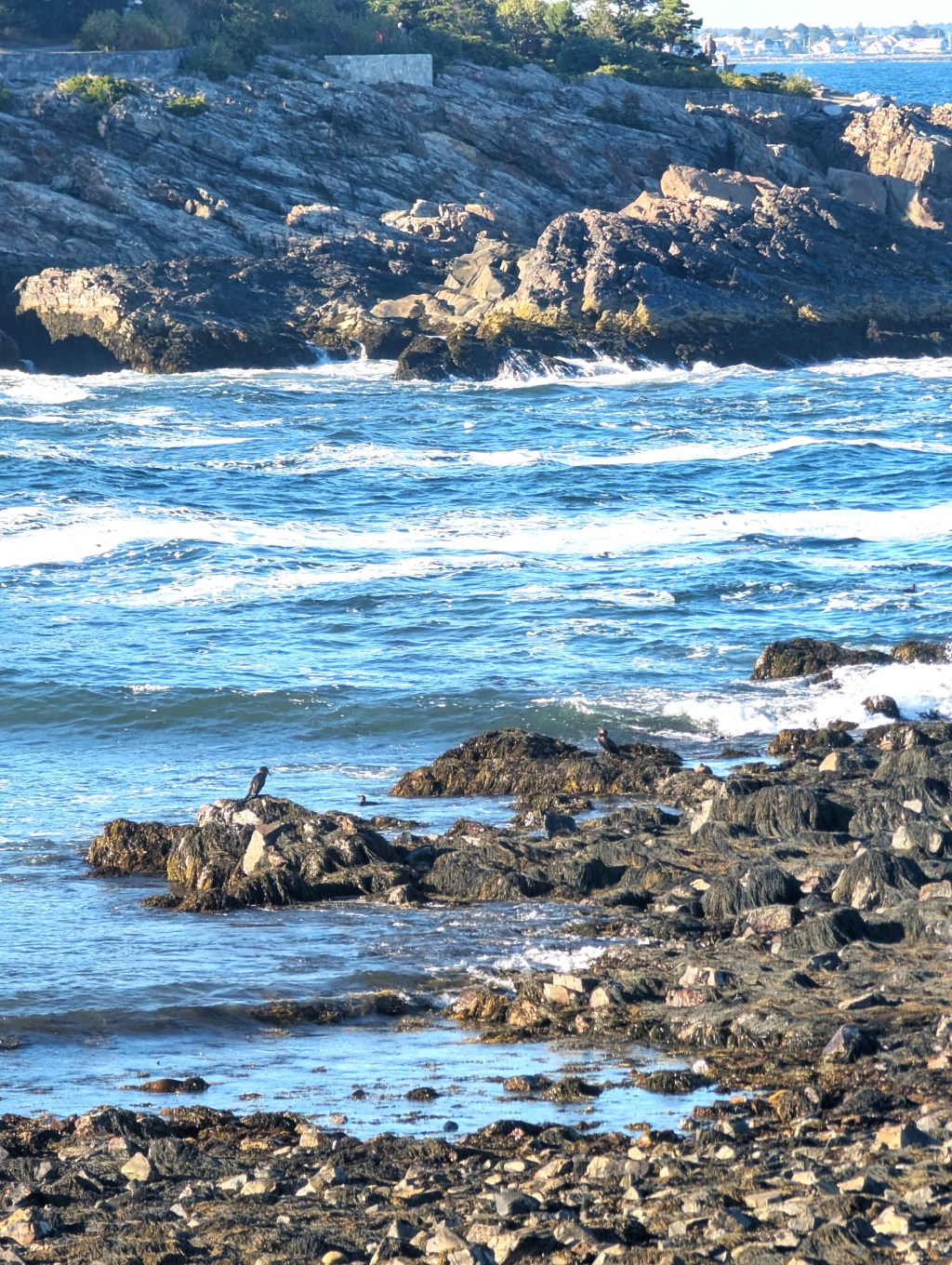
A map of the coast of Maine reveals a fractured coast with more than 200 barrier lagoon systems separated by high granite hills. There are numerous islands and persistent fog. All these factors made the job of the revenue enforcement officers much harder, even in the wide open waters of Passamaquoddy Bay, the south shore of which is the boundary between the US and Canada. Men in small boats were most likely fishermen, but could also be carrying untaxed goods from one country to another.
Pirates of Maine 1632-1717
With many historical figures to choose from, I’ll focus on two names of note in the early history of the “down-east” coast. The first was an Englishman named Dixie Bull who came to the new world in 1632 to trade English goods for furs. Claiming he was set upon by French brigands while near the coast, Bull said the Frenchmen took all his goods and left him penniless. Even so, as he sailed up the coast, he managed to accumulate 15 men, probably all his shallop could hold, to help him find the thieves.
The crew never did find the Frenchmen, and began stopping small coastal merchant vessels and seizing their goods. Bull and his crew decided to attack an English settlement, the tiny village of Pemaquid at the mouth of the Damariscotta River. Meeting almost no resistance, Bull and his crew got away with about 500 English pounds worth of trade goods. Governor Winthrop responded by sending a squadron of small boats to search for and seize the pirates, but they returned empty-handed after two months and Dixie Bull and his crew were never seen again.
Another pirate of note was Black Sam Bellamy. Bellamy was among the most successful pirate captains, attacking and seizing at least 53 boats during his year-long career as a pirate. Bellamy had come to Massachusetts as a young man in 1715 and was rumored to have fallen in love with a woman. In 1716 he set off to seek the treasure from a Spanish fleet wrecked in Florida.
Disappointed by the failure of the search, Bellamy joined the crew of Benjamin Hornigold whose first mate was Edward Teach, later known as the infamous pirate, Blackbeard. When the crew became disgruntled with Hornigold’s decision to not attack ships flying the Union Jack, the old Captain was voted off his ship and left in a small launch with Edward Teach. Bellamy was elected as the new Captain and began a campaign of raiding all manner of ships.
In 1717, Bellamy captured the slave transport ship Whydah and its hoard of gold, indigo and ivory. Several members of his crew expressed a desire to return to the northeast and the newly rich Bellamy also wished to find his lover. The Whydah sailed to Machias Bay in Maine, and careened the Whydah to clean the hull and perform necessary repairs. While there, it was suggested that he declare Machias a kingdom and himself as lord. He said he would think about it, but when the Whydah was seaworthy again he sailed towards Cape Cod to find his lady love. On the 26th of April, 1717 the Whydah was caught in a strong nor’easter and sank off Cape Cod with the loss of Bellamy and more than 140 crew. Bellamy had captained the Whydah for only 9 weeks.
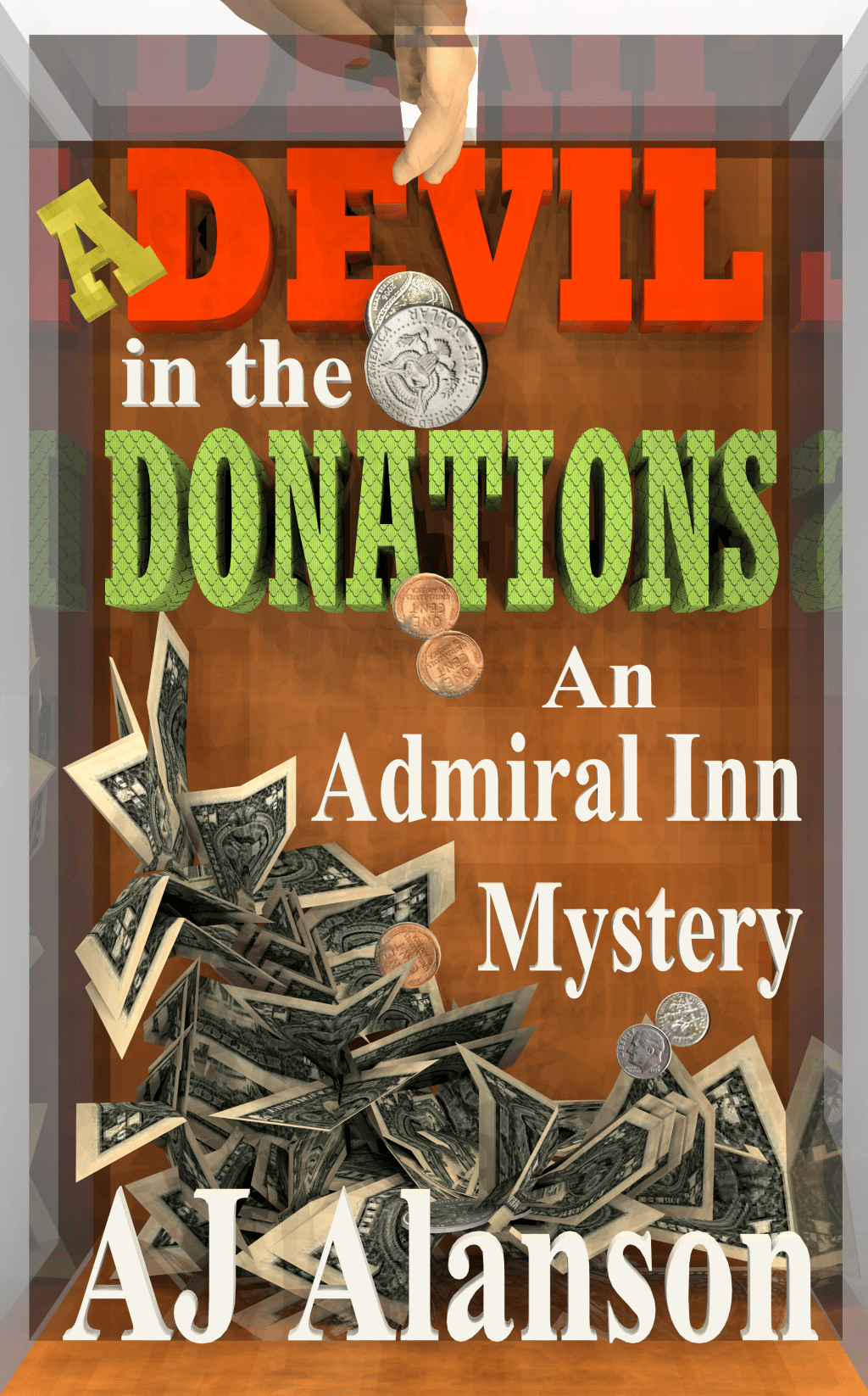
In 1984, the wreck of the Whydah was found by treasure hunters under only 14 feet of water and 5 feet of sand. Much treasure was recovered, including a cannon whose barrel was stuffed with precious gems and gold. Many artifacts from the ship are on display at the Whydah Pirate Museum in West Yarmouth, Mass. In a fictionalization of Maine’s illustrious pirate past, June Faust’s bargain mansion begins to surrender its secrets in A Dragon in the Bookcase. Artifacts recovered from this discovery, I am told, are on display for your perusal in the front hallway of The Admiral Inn while you wait to be seated in the dining room.


 A Well Seasoned Story
Leave a comment